Showing posts with label C. TV Advertising. Show all posts

Wednesday, 11 February 2015

Editing techniques


The history of editing

The first moving image production was shown to the public in 1895. There were no methods of editing the sequence that was created, any "effects" would have to be done in-camera, as in there at the time of filming, leading to the technique being very limited in what could be done. The first film to utilize what today we consider post-production was directed by Robert W. Paul and was entitled Come Along, Do!, released in 1898. The film was the first of its kind as it features more than one shot and therefore showcasing the technique of editing shots into sequences. 

Since then things have changed drastically. When editing techniques were further perfected a widespread method was adopted. As all moving picture productions were recorded on film it was edited using the film. A copy of the footage would be made, called the positive, as film was created as negative. The positive of the film would then be edited.One of the transitions, still used in modern day film making, is called a cut. This is where one scene ends and the next scene immediately starts. The term "cut" comes from the older days of editing in which film would have to physically be cut by a person, or machine, and then taped back together to create the effect.


After the takeover of non-linear editing systems, editing footage on computers, the role of linear editors, cutting clips manually, became more and more redundant as more people were looking to digitize their productions. The linear method of film editing is still going however it is a lot less popular than it used to be due to technological advances. Since the improvement of non-linear editing systems, various different techniques have become more popular. Nowadays the majority, if not all, editing work on movies is done digitally through a video editing software such as Adobe's Premiere Pro, or Sony's Vegas to name a few. A final technique which is still used today is in-camera editing where all the effects are performed live, for example an explosion effect can be loaded and set in-camera so when they start rolling it can be triggered and can be seen. The opposite of this would be editing the explosion in after. Although this is still used today it is not as common as adding effects in post-production is generally cheaper and can be timed perfectly and edited if needed.
(http://en.wikipedia.org/wiki/Film_editing)


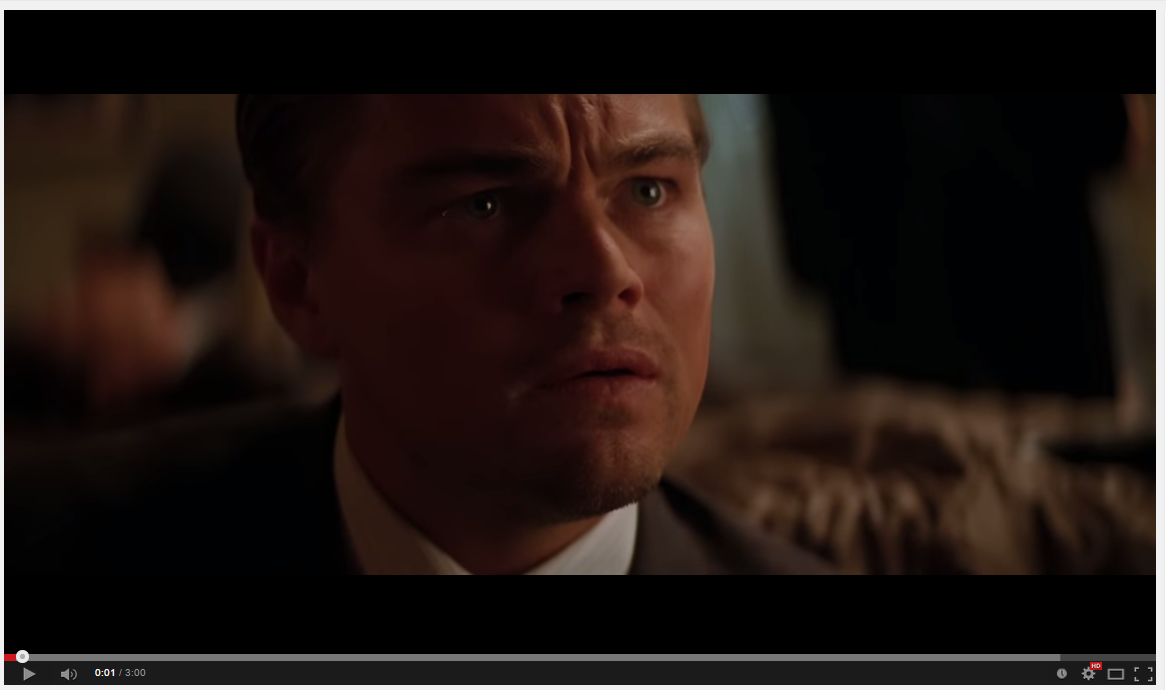
Above is a clip from the film Inception released in 2010 and directed by Christopher Nolan.


Visual analyisis


Establishing shot

An establishing shot is a shot taken of a surrounding or setting to show the audience the area and the set the scene, usually using a wide shot. Within the text I have chosen there are 3 establishing shots used at the beginning of each shot that is using a different setting. One at 0:17 to show the mountains, one at 0:31 and 0:36.


Transitions

The first technique used commonly in editing is transition. It is impossible to have a feature-length film without a transition. Transitions can be done for various effects and come in several types. In the extract I have chosen from the film Inception there are a lost of fast-paced cuts. I think that this has been used to give the audience a build up of suspense due to the nature of the film.

180° rule
The 180° rule is a basic rule in film making and should be generally stuck to unless the director wanted to deliberately break this rule for effect. The rule is that the camera should stay within 180° of the subject between cuts. If this rule is broken it can cause confusion and disorient the viewer. In the text I have chosen it does not break the 180° rule however one example of it being broken can be seen in The Shining’s bathroom scene. Due to the genre of this film Stanley Kubrick may have chosen to do this to unsettle the audience.


Shot-reverse-shot 
A shot-reverse-shot is a film technique where a shot views the action from the opposite side of the previous shot, often used during a conversation on screen. Within the extract from Inception there doesn't seem to be a shot-reverse-shot but I have found an example as shown below.


Match on action shot
A match on action shot is where you see a character performing an action at one camera angle and then the camera angle is changed to see them follow through the action. This shot can be done for effect, to keep the audience in suspense but it is mainly used to identify the person carrying the action. From what I could see, there wasn't a match on action shot within the sequence however I have found an image to demonstrate what a match on action shot is. 


Motivated editing  
Motivated editing is where something happens in the preceding shot which affects the current shot. An example of this is a character points into the distance and then the clip cuts to show what the character is pointing at. One example of this could be a eyeline match. An eyeline match is a technique based on the premise that the audience will see in the next shot what the character is looking at in the current shot. In the text I chose there is a eyeline match at 0:06 where in one shot you see the character Cobb looking through the scope and then in the next shot you see what he was looking at (as shown below).


Identification with main protagonist or other characters

Screen Time 
Often in moving image productions it is clear to see who the main protagonist of the piece is simply due to the amount of screen time they are given. In the the film Inception, The main Character is Cobb, Who is seen at the beginning of the extract however within this extract the main protagonist would be Arthur who is seen fighting in the hallway. You can tell this due to the amount of screen time he has during this scene compared to the other characters.

Close Ups
Close ups are also used to indicate and give the audience a chance to identify the main protagonist(s). In my sequence chosen, the close ups that indicate the main protagonists are at 0:01 showing the character Cobb and another one at 0:08. As I mentioned before, this character hasn't been given a lot of screen time during this scene but there are several close ups showing him which also indicates that he is also a main protagonist.

Point of view shot
A point of view shot shows what a character is looking at. Within this extract there are two point of view shots, one at 0:14 where Cobb is looking through the scope of the gun and another one at 1:28 being Yusuf's point of view as they hit the motorcyclist.


Reaction shot
A technique used to portray to the audience who the protagonist of the scene is, it is to show the character's reactions to various events. For example if there is an explosion and then it cuts to a close up of a character's face looking shocked, we can assume that the character shown is the protagonist. During this clip there is a reaction shot as shown below.
Here we can see the motorcyclist getting ready
to shoot at the van.


And here we can see Yusuf's reaction to getting
shot.


Appropriate involvement in the storyline, pace, tension and suspense.

Shot variation
The clip I have chosen uses a wide variety of different shots to give different perspectives of the sequence such as a medium shot, over the shoulder shot, close up, long shot and eyeline  matches.
Montage
A montage is when a series of short shots are filmed and rapidly edited together. Montages are often used to indicate the passing of time. One example of a montage would be the opening scene to Hot Fuzz. (as shown below).


Providing or withholding information
The extract from Inception that I have chosen doesn't give much information yet it doesn't withhold any either. The only information that is really given is that Cobb is trying to find the truth that they want a character named Fischer to learn.

Parallel editing
Parallel editing (cross cutting) is the technique of alternating two or more scenes that often happen simultaneously but in different locations.Within the sequence I have chosen, due to to the story line of the film there is parallel editing throughout, showing one scene then alternating between two other scenes.

Editing rhythm 
Editing Rhythm is the speed that the sequence is edited at. At the beginning of the extract the edits are fairly average speed until about 0:34 and then they gradually speed up to build a sense of tension. Within this sequence some edits of certain shots are slowed down drastically giving it an atmospheric feel and to put the viewer in suspense.

Construction of time and space of the story both diegetically and implied
This is when time is constructed using various techniques such as time-lapses. Diagetic & implied types of different ways to show the passing of time. Digetic is when we literally see time passing(time-lapses). Implied is if we see a character get onto a train in the day and get's off when it's dark we would assume that time has passed due to the fact that it's gotten darker in the scene. Within my extract there isn't any time-lapses shown however I have found a great example of all the time-lapses within the series Breaking Bad.


Cutting to soundtrack
Cutting to soundtrack is where the footage cuts in time with the music. Within the sequence the soundtrack builds up as the speed of the shots increase along with the tension of the shot. When the gun is knocked out of Arthur's hand at 1:12 is signals the change in the soundtrack, becoming more up beat. At 2:53 near the end of the sequence a gunshot is fired and the soundtrack stops immediately.

Multiple points of view 
This is when several camera angles are used in quick succession to give us various points of view for the entire sequence. Within the fight scene they have used two different cameras positioned at two different angles, there in one camera position on the floor of the hallway so then it moves with the rotation of the building and the second camera is elevated on a crane to move with the action of the characters this then gives us various points of view throughout this sequence and it alternates between these angles. 

Cutaways 
a cutaway shot is the interruption of a continuously filmed action by inserting a view of something else. It is usually, although not always, followed by a cut back to the first shot. As shown below you can see in the still images that it goes from the view of the van being shot at then it cuts to a man holding a gun getting into a car and then it cuts back to the view of the van.


Jump cuts 

A jump cut is a cut in film editing in which two sequential shots of the same subject are taken from camera positions that vary only slightly. This type of edit gives the effect of jumping forwards in time. Within my sequence chosen there isn't a jump cut however there is a jump cut at the end of the opening scene of Snatch where the subject changes from being in one environment to another.

Tuesday, 10 February 2015

Editing Quiz

1) What do the numbers 16:9 refer to?
16:9 is the aspect ratio for widescreen televisions. An aspect ratio is the width in relation to the height of a screen.

2) What is the frame size of a 1080p video file?
A 1080p video file has a frame size of 1920x1080

3) If you have a video file which is 720:50p what is the frame rate and what does the p stand for?
The frame rate of a 720:50p video is 50. The p stands for progressive scan.

4) What is the difference between p and i?
 P stands for progressive scan and I stands for interlaced. P shows each frame, one at a time. I shows half a frame and interlaces them for a smooth movement.

5) What frame rate is real film shot at?
Real film is shot at 24 frames per second.
6) What might be the advantage of shooting at a higher frame rate?
Higher frame rates give smoother movement.

7) What defines a lossy file?
A lossless file is a file that is highly compressed to reduce file size.

8) Name three file types commonly used in editing?
Three file types commonly used in editing are:
AVCHD, MPEG and MOV

9) What is the difference between a video file type and a codec?
A codec is how a file is compressed and decompressed and a file type depends on how compressed a file is and its quality.

10) What is bitrate?
A bitrate is the rate at which a file processes information.

Tuesday, 3 February 2015

How to guide - The editing process

Brut Evaluation

The brief for the Advertisement Production for this unit was to re-brand a Unilever project, aiming it at a new target audience. We had to produce a TV advertisement to a good standard showing some imagination and also to produce a product that reflects near-professional standards.

My group chose the men’s aftershave Brut aiming it and teenagers, students and young men. We each made presentations using Prezi, displaying and explaining what our ideas consist of, and how we execute them. After being put in our groups and after a long conversation our group decided to re-market Brut because we thought the idea would be more successful than the other proposals that had been put forward by other members in our group. Brut was originally aimed at older men with several sports sports stars featuring in their advertisements such as Muhammad Ali, Henry Cooper and Kevin Keegan . As said previously we decided to try and appeal to younger men and students due to the fact its popularity had decreased the 70s and because we felt this would be a natural and needed transition for the company in real life, as well as being students ourselves, it made it easier to create a product that appealed to our target audience.

To gain feedback we first played our finished product to the rest of the class, who luckily, happened to fit into our target audience. After watching the advert everyone gave us feedback, specifically 3 things they liked about the advert and 2 things they felt could be improved. For the most part, people liked the advert saying it hit the target audience very well and was funny. A recurring suggested improvement was some of the sound in the advert was hard to understand, referring specifically to sections of slow-motion used that made the speech slightly ambiguous and hard to understand as well as the voice over being somewhat irritating. 

We also created a survey using the website survey monkey. This allowed us to design a specifically tailored questionnaire that would be able to provide us with the information we required as well as creating graphs so then the information could be easily read and understood. The questionnaire contained 9 questions (Ideally it should of contained 10 but there was complications with the website):
1.  Name, age and gender?
2. What did you like about the advert? Give reasons for your answer
3. What didn't you like about the advert? Give reasons for your answer
4. Who do you think this advert is aimed at?
5. Is it obvious what the advert is selling?
6. Do you think this advert works?
7. What could be improved?
8.would you buy this product?
9. How effective do you think this advert is?


After sending out my survey, 18 people had filled it out. From The results of the questionnaire it was clear to see that the audience did not like the voice over, they said to have found it irritating and and was said to be alike the voice of “Cartman” a character from the series “South Park". Luckily almost everyone who filled out the survey could tell who the advert was aimed at and what it was selling. 66% of the people who filled out the survey believed that the advert was very effective, 33% said it was a little bit effective and no one believed it wasn't effective. As I said before, it was clear to see that the voice-over wasn't liked, this may be due to the change in speed or just the accent.

With regards to appropriateness to the audience I believe we succeeded in appealing to our target audience. Both the results from the questionnaire and the feedback we gathered from our peers suggested the audience was able to identify that we were targeting students in between the ages of 16 and 21. I feel placing the advert within a college environment helped to associate the product with students allowing them to identify the product is for them. We also included language used by students of this age such as “viscous par” which will also relate to our target audience therefore making the product by association seem more appealing to them. There was also a heavy use of humour implemented in the advert as this also acts as a convergence device as it also makes the product more attractive to the demographic we were targeting.

The mise-en-scene of the advert seemed to work well. The setting of the advert was a college and therefore filming in a real college meant we didn't have to manipulate our surroundings too much if at all to create a setting that was believable. There were three locations/settings in the advert, a classroom, corridor and courtyard. The only setting we had to change slightly was the classroom, including moving some tables around and changing the position of some seats. The main thing that stood out to me as being lacking was the amount of extras. Some of the shots could have been made to look more convincing had there been one or two more people in the background. It was difficult to get people who weren't busy filming their own advertisement or in a lesson; however this didn't hurt the advert too much but would have made it seem more professional. There is one shot we used that slightly breaks the 180 degree rule, this shot however doesn't confuse the viewer and also allowed for a nice shot that shows the boy walking past out of shot, and then focuses of the girl with a close up of her face showing a new found interest because of the product.


We also have another shot we used at the end. This is a close up of the Brut bottle on a bench that is then thumped with thumbs up. This ended the advert nicely as it shows a close up of the product leaving it fresh in the viewer’s minds. The editing I feel for the most part also worked well. We used many short shots and cuts to transition from each one as this grabs the audience’s attention, and also matches the over the top style of the advert that appeals to our target audience. The cuts I feel also flowed well making it easy to watch. One part of editing that I didn't think worked well was the implementation of screen bars half way through the advert once the character uses the product. I personally believe that it looks quite tacky and didn't really fit with the advert.  We did have a slight mishap with the screen bars but that was only noticed after publication; in one all but one of the specific shots contains the screen bars; this is something that could be rectified to polish the advert off.


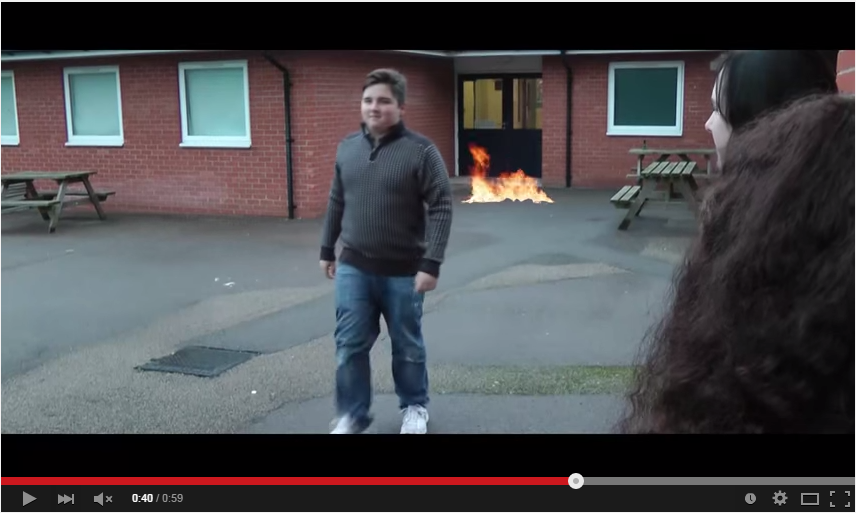
We also used some special effects in the advert in the shape of an explosion that appears when the character throws the Brut bottle arrogantly over his shoulder. This was very over the top however suited the rest of the advert but could be improved by better placement and tracking due to when the character was walking away the fire looked out of place and creates a contrast which just looks unusual as well as the fact the fire changes positions within to shots.


 One feature that worked well in some areas but not others was the use of slow motion. The feedback we got from our peers was mixed as in some cases the slow motion made the narration unclear, and said some words were hard to recognize. I personally agree with this as it was a bit too over the top. An improvement that could be made is to scale down the severity of the slow motion as to still maintain the humor gained by using it, but also allowing the audio to become clearer and easily understandable. As for sound we used music created by a member of our class. To begin with we use a piano piece that is quite sad and low tempo to convey the characters feeling of rejection. In correspondence with this we used a voice over that narrated and commented on the characters actions and surroundings. The voice used gained mixed reviews from peers. This voice almost directly talks to the target audience, asking rhetorical questions that may help the audience relate more to the advert, as well as being funny. Half way through the advert when the character uses the product we switch from the sad background music to a more upbeat rock style song that conveys the new found confidence gained because of the Brut. This gives across the message that Brut makes you more confident and in turn makes you more successful.

Our feedback told us that we had successfully advertised the product to our target audience. In relation to story line and narrative, our advert is very simple. In the advert we show two encounters between the girl and the boy in which the boy is totally ignored and rejected, because he isn't wearing the Brut. The third and last encounter is where we show the transition Brut supposedly gives you, and the boy successfully gains the attention of the girl. The basic selling point here is sex appeal and the possibility of successful romance, with the connotation of success in everyday life. I think this would work well for our target audience with companies such as Lynx who target a similar audience use the same selling points. The message we were trying to send was that Brut is now aimed for at the younger male. We did this by placing the advert inside a college and the characters were students. This immediately would strike a chord with our target audience identifying that the product is intended for them. We used demotic language that the age group use which also associates out target audience with the product, while the narrative was really an emphasized version of a situation many of our target audience could relate to. All this would hopefully make the product appeal to them.The overall quality of the advert is quite high considering but could be improved. I think the range of shots as well as the fluidity makes it easy to understand and allows for the message to be received clearly. The main thing I would change to increase its professionalism would be the sound specifically the clarity of some points of the narration. The change would be made by speeding up the narrative that has been slowed down. This would result in the words being said becoming easier to understand improving the advert.

In regards to whether the advert would meet ASA and OFCOM regulations, I believe there may be one problem. There is a section of the advert were the narrator pronounces the first part of the word “bitch” but is cut of as the advert cuts to another shot, not completing the word, but still having the connotation and its quite obvious that the word was said. An ASA BCAP code that may affect this part of the advert is 4.1: “Marketing communications must not contain anything that is likely to cause serious or widespread offence. Particular care must be taken to avoid causing offence on the grounds of race, religion, gender, sexual orientation, disability or age. Compliance will be judged on the context, medium, audience, product and prevailing standards.
Marketing communications may be distasteful without necessarily breaching this rule.  Marketers are urged to consider public sensitivities before using potentially offensive material.
The fact that a product is offensive to some people is not grounds for finding a marketing communication in breach of the Code.”

Because the connotation of the word is there, and the narrator is talking about a female character, this could cause offence even if the intention was humor, meaning it may have to be removed before it could be seen on television. It may also break the OFCOM rule of swearing on TV before 9pm. This could lead to complications to intended times to broadcast this advertisement.

In summary I am quite pleased with the advert overall and we managed to stick to the original idea we had. There were some shot changes and some added effects such as the explosion and slow motion used that were thought of after pre-production, this however is a natural part of creating moving image media and didn't affect or alter the premise of the idea we were selling. In regards to the feedback received i am also very happy. The overall feel was that people enjoyed the advert and felt it reached its target audience very well. Some parts of dialogue need to be made more concise so everyone is able to understand what is being said, but apart from that and making sure we comply with all ASA and OFCOM regulations, the advert was received very well. When it comes to my personal involvement in the production I felt I could have involved myself more, but it was difficult due to having time off college and I was just given tasks that the other members of the group left me, such as the recces, location releases and storyboards.


Thursday, 13 November 2014

The forms and styles of different TV adverts

Task one: the forms and styles of different TV adverts

Form Discriptors
·         Animation - A production made up of moving pictures or CGI animation. This is a used technique to make surreal or obscure scenes possible.
John Lewis: Christmas 2013 advert, The Bear and the Hare - https://www.youtube.com/watch?v=XqWig2WARb0
The commercial uses a unique animation style that combines traditional 2D hand-drawn animation, stop frame, and 3D model made sets.
Twinings: Gets You Back To You - http://www.youtube.com/watch?v=LdkcsDueSMM
                                      

·         Documentary / factual - A real life, hard-hitting advert that is used to make people think, usually used on anti-drug, drink adverts or speeding adverts.
UK Anti drink-driving advert: aired 2008 - https://www.youtube.com/watch?v=uZtwRqRyEN0
UK road saftey advert, speeding - https://www.youtube.com/watch?v=HeUX6LABCEA


·         Talking heads - An advert where containing a voxpop or where a person is interviewed on their opinions on the product.
Amazon: Kindle Paperwhite advert - http://www.youtube.com/watch?v=3H2NXluJRvg
Febreze: Breathe Happy advert - http://www.youtube.com/watch?v=APRNiTK494I

·         Stand alone - An advert that does not link to any other adverts from that brand.
Weetabix: dubstep bears - http://www.youtube.com/watch?v=bbEy98llGRU

·         Series - A number of adverts showed one after the other to create a continuous series of advertisement.
Cravendale: cats with thumbs - http://www.youtube.com/watch?v=h6CcxJQq1x8
Compare the Meerkat: Compare the market - http://www.youtube.com/watch?v=4Ust9YBlEfY

·         Realist narrative - An advert that seems real to allow the audience to relate to the characters and make them think they are watching something real. Oreo: Explanation to Daddy - http://www.youtube.com/watch?v=m0rKn7X7UWk
Old Spice advert - http://www.youtube.com/watch?v=owGykVbfgUE


·         Anti-realist narrative - Shows the viewer a made-up , unreal situation that often offer humour or entertainment alongside advertising the product.
Tetley: alien invasion - http://www.youtube.com/watch?v=CjNeAxTGVCM
Cadbury: Gorilla Drummer - http://www.youtube.com/watch?v=Wy52yueBX_s


style descriptors

  •  Humour - Funny adverts to ensure the audience remember the product
Heineken: walk in fridge - http://www.youtube.com/watch?v=S1ZZreXEqSY
John West: bear fight - http://www.youtube.com/watch?v=Ys0gj7-VH6A


·         Surreal -
Oasis: Rubberduckzilla - http://www.youtube.com/watch?v=0tpMcyda86I
Jammie Dodgers: A certain gooey thing - http://www.youtube.com/watch?v=Clu36dt2y88

·         Shocking / dramatic - An advert that surprises the audience by being almost realistically scary.
Anti-Smoking: Lungs - http://www.youtube.com/watch?v=AIyqcST29wQ
Climate change: bedtime story - http://www.youtube.com/watch?v=QD2WTK94c1U


·         Parodic - A humorous commercial based on existing popular culture but modified.
T-Mobile: Royal Wedding - http://www.youtube.com/watch?v=Kav0FEhtLug
Somersby Cider: Apple Store - http://www.youtube.com/watch?v=Y3rNQ2pTyAY


·         Nostalgic - An advert that is nostalgic, that makes the audience remember the past.
Smash: Aliens - http://www.youtube.com/watch?v=ofv5Ca1LD8U
Oxo advert - http://www.youtube.com/watch?v=FtEBtv64LBM