Friday, 25 March 2016

Styles, conventions and techniques of a music video.

In concert and 'as live' footage
This type of music video is to show the band or singer playing to a live audience.  It is a natural way of showing the talent of a band or singer but can be experimented with by adding a few different shots in which link well with the music. As you can see below an example of this is a music video for
'Sing Your Life' by Morrissey.


Narrative and Interpretive 
This type of music video can either mirror or contrast with the lyrics.  They include a story for the audience which is effective because they can see what the song is about and appreciate the tone and mood of the lyrics. An example of this would be the music video for 'Disco 2000' by Pulp. The music video tells the story of a man and women going on a date to a club called 'Disco 2000' however it doesn't follow the lyrics completely but interprets the song in a different way.


Surrealist/absurdist
One of the main objective when it comes to a surreal or absurd music video is to surprise the audience which can lead to them remembering the video and the song.  These sort of music videos can either project what the song is about in an over-the-top way or have very little similarity to the song. an example of a surreal or absurd music video would be 'Ture Faith' by New Order, Despite the 'in concert' footage the msuic video has little relevance to the lyrics.


Impressionist
Impressionist music videos are effective when wanting to get the audience to feel emotional (have goosebumps). It gives them more of an artistic license and you commonly see a lot of soft focus and slow panning in these sorts of videos. An example of this would be 'Earnestly Yours' by Keaton Henson and Ren Ford, Despite the fact there isn't a lot of soft focus or slow panning I believe that this music video can be classed as impressionist as it is effective at getting the audience to feel emotional and in some sense give them goosebumps.


Inter-textual: Synergy, Allusion, Pastiche, Parody and Homage
These videos always have a reference to another song, film, historical event, etc. They can either been seen seriously (homage) but more commonly are projected as comedy with some elements of satire. An example of this would be The Midnight Beasts Parody of You & I which was originally by One Direction.


Animation (stop motion, digital)
Videos in this category are created and contain animation.  This can appeal to the audience because it would be something different to look at, making it a talking point. An example of this would be 'End of the World' by The Cure which use stop motion animation in their music video.

Lip-synch - miming and playback
A music video performance might want the artist or band to mime the lyrics in order for them to be in time with the track.  This type of music video normally comes with a narrative and sometimes the speed of the song or video is changed with the pace of the track. An example of this would be Emperors New Clothes  by Panic! at the Disco. For the music video the track was sped up so that they could get the jerky movements in the music video as well as the artist lip-synching and then the track can be laid over the top this is shown in the 'beyond the music video' which is below the video.


Cutting to the beat
You will see in these types of music videos that the ryhythm and beat of the song is in time with the dancing or shots. An example of this would be 'Sexy and I know it' by LMFAO, in the music video you can see that some of the movements and dances are cut in time with the beat.


Post-production effects
These music videos are effective when wanting to impress that target audience if the visual effects are cutting edge or are done with a unique idea behind them.  When the effects are complex or mesmerizing and usually show a contrast you will attract different types of audience. An example of this would be 'Safe and Sound' by Capital Cities. The way that old-style dancing with the people in black and white is merged with the updated style of dancing throughout time which is in colour is done in post-production as well as the text. The setting, lighting and colours, well, the music video in general is aesthetically pleasing.


Split screen
This is an example of a different but interesting editing technique.  Different images of different evens are all shown on the screen at the same time which results in an effective panorama.  It is different to multi-imaging but is more modern as non-linear editing makes it more efficient and clean-cut. A music video that could be an example of this is 'I Heard' by Young Fathers. It’s a trippy effect that encapsulates Young Fathers’ somewhat trippy vibe, This being said, its an effect that can express a lot of ideas and feelings.


Chroma key
This is where you can shoot a music video in front of a green or blue screen and remove the green or blue (chroma keyed) and replace it with a more interesting setting.  It makes having any setting you want possible. An example of this is David Hasselholf's 'Hooked on a Feeling' which every scene is filmed in front of a green screen.


Camera Movements
Camera movements create a flow to the music video and a sense of excitement.  These types of music videos use panning, tracking shots, tilts and crab shots and the purpose of that is to create a sense of movement. An example of this is Keaton Hensons 'Lying to You'  where it uses tracking shots to follow the girl as she's walking down the street. 


Camera angles and shot types
The effect of using a variation of shot types, shot angles and shot length can add different types of atmosphere, tone and meaning.  Shot variation can also show different elements of mise-en-scene. An example of a music video that uses a variation of shot types and camera angles is Jay-z's '99 problems'. In the music video the atmosphere and camera shots make the singer look taller and important and as if he is playing a tough character and due to the shot variation you can see that it's set in an estate-style street and flat with working-class people.

Mise-en-scene
MIse-en-scene in music videos can be very startling. Aspects like lighting, objects, settings and other elements such as costumes and props can create a certain mood and atmosphere such as anger, passion, glamour, love, desire and so on.  One example that Mise-en-scene is crucial is in 'Lullaby' by The Cure. without the low lighting it wouldn't give a the eery feel that is needed to go along with the track and the costumes and props are essential to show that is is a 'nightmare'. 


Thursday, 24 March 2016

The Purpose of Music Videos

Within this essay I will cover how music videos began, how they made themselves as a part of modern music culture and the function of music videos. As an audience we have always enjoyed adding a visual element to an audio based medium. In 1941 the Panoram Soundie, which is a jukebox that plays short video clips along with the music, was introduced in clubs and bars in the USA. This was the beginning a music video history which led to music centered films and music television shows such as Top Of The Pops. All it took was the advances in technology to begin producing music videos to allow for artists, directors and producers to create a visual image to accompany the music.

Promotion
When it comes promoting an artist or band a music video is made to do so, directors and producers can also be promoted through these music videos. For example, after The Smiths downfall, Morrissey used a music video to promote his new song ‘Suedehead’ which was his debut solo single released in February 1988.


In order for a band or artist to really take advantage of using a music video as a method of promotion some choose to have their name or a recognisable symbol/icon in the video as a means of identification,  an example of this is within the music video ‘Suedehead’ where Morrisseys signature is scribbled on to the wall.


The music video was directed by Tim Broad was a British film director, best known for his music videos for the singer Morrissey.  Broad directed the video for The Smiths' songs "Girlfriend in a Coma" and "Stop Me If You Think You've Heard This One Before" and subsequently a number of videos for Morrissey, seven of which were released on the compilation Hulmerist. Due to the promotion through directing videos for The Smiths and Morrissey, it led  him to direct the videos for the Mike and The Mechanics' songs 'The Living Years' and 'Nobody Knows', Marc Almond's 'Tears Run Rings' and several songs by The Jesus and Mary Chain.

Directors can also gain promotion from creating a music video as it can be used as a quicker and fairly cheaper method of displaying their directorial talents compared to a full length film. an example of this Edgar Wright’s music video for ‘Blue Song' by Mint Royale which also gave promotion to comedians Noel Fielding and Julian Barratt, of The Mighty Boosh fame, as well as Nick Frost of Spaced and Shaun of the Dead fame and Michael Smiley, also of Spaced.


Producer's strategies
When it comes to marketing, many bands will be marketed in different was depending on their popularity. Mainstream artists will tend to have a vast amount of publicity behind them and a have polished image which gets reflected in their music videos an example of this could be

On the other hand, independent artists who don't have the same level of publicity and are just starting out do not always have the finance to back a large production therefore, they are able to release music videos which are paid for by their independent record labels. One example of this would be the band Wolf Alice, their record label, Dirty Hit paid for the production of their music videos as they didn't have a lot of publicity or the finance to back the production themselves.


However, due to expansion of media outlets and in-home consumer technology, many artists are now able to produce and distribute their own music via the internet, most commonly on YouTube and social networking sites such as Facebook. Most self-produced artists usually attempt to find their way into the industry by releasing videos and EPs via their own means. An example of this would be Justin Beiber. In 2007 he uploaded a cover of Chris Brown’s “With You” on YouTube which went viral.


Extention of income
Music videos can be, and often are, used as an additional source of income for the artists and higher ups. As technology evolved it became easier for music videos to be seen by as many people as possible, to the point that a music video can be more popular than the song itself which still gives the producers and artists money. Extended artists and record labels receive payment and royalties every time their music is played on the radio or on television.  This is because they need to be paid in exchange of their product being used.  The mainstream artists and bands are more popular which leave the independent artists and bands having less air time on the radio and television.  The best way to be successful as an independent artist or band is to show yourself off on website such as YouTube so that they could then be spotted by a producer or record label.  Playing at gigs to the public can also help to be noticed especially if you are hired again. 

Extention of outlets

Media outlets such as YouTube, Spotify and television music channels are all sourced where someone can access music video or songs.  YouTube would have a channel called VEVO where you can access all the latest mainstream music.  Advantages of using media outlets is that you can make yourself pretty well-known and can gain a number of fans.  Disadvantages would be that you would be competing with a lot of popular artists and bands which is what the public would be looking for the most.  Independent artists and bands also have the disadvantage of only having one specific type of target audience to fit their genre, so their fan-base wouldn’t be as big. 


Synergy
In the media industry particularly large and influential companies will at some point focus on synergy for their product/service. Synergy is simply extending your companies product to various other areas of production and media. Synergy helps both companies involved reinforcing the angry birds brand more as well as using the brand to sell more of the other companies products all in all helping both sides make money. Synergy is also used in the music industry, for example Justin Beiber has a huge range of products with likeness to himself and/or logo on them including; party equipment, blankets, cardboard cut outs, slippers, toothbrushes, headphones, perfume, bedsheets etc. This just goes to show how far a band or artists  influence can go with synergistic marketing like this it ensures that both the artists/producers and the companies that make these branded products continue to make money.


Wednesday, 27 January 2016

Animation Evaluation


To review my stop motion animation project I have chosen to produce a written report as I feel that I can go into more detail when evaluating my work and I can then ensure that I include all the information I need. Where as with an oral presentation I don't feel comfortable with standing up infront of the class and it would affect the amount of information I would give therefore it would be a big risk as I would miss out vital information about my e-sting and then not deliver the information I need such as; what my stop motion animation project is about, how the development of it came about, the constraints I faced and also evaluating the audience responses effectively.

To ensure that my stop motion animation will be seen I have firstly placed it onto YouTube, which enables it to be seen publicly by anyone who choses to want to watch it. When it came to gaining feedback there was certain criteria I wanted to achieve such as what my audience thought of the intended genre and audience, the content and narrative, the style (of animation; Claymation, puppets, models, etc.), the characters (development, quality of production, costume, etc.), the techniques and technical qualities (frame rate, movement, skill in animating multiple actions) as well as aesthetic qualities (the way it looks; mise-en-scene etc.) and creative qualities (imagination and flair).

To obtain this feedback I created a survey on a website called SurveyMonkey. I sent out this survey via email to various students at my college and I also posted my survey on several media sites that I use such as Twitter and Facebook to reach a variety of audiences. Below are screenshots of some of the questions I asked and the feedback I gained.


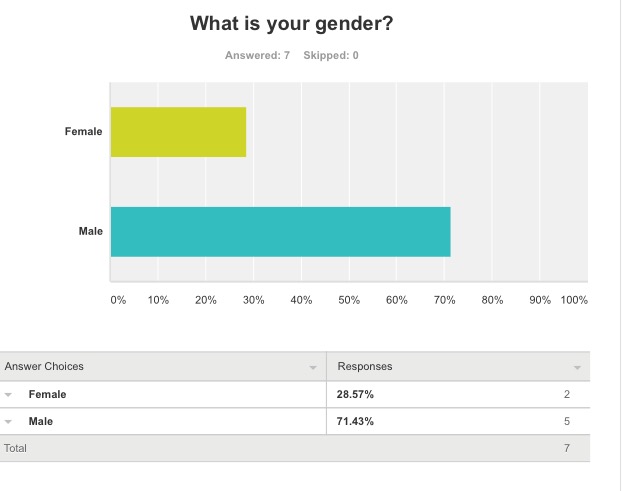
To begin with the first questions I asked the audience their age and gender, I wanted to see if they were in my target demographic  I also asked this because it could influence the results I may receive from the other questions, as well as the fact that I wanted to see which age groups and genders were most interested in taking part in this survey to do with animation. As we see a predominately male audience who answered however there is still a good amount of female feedback which balances the responses out. The age groups however were mostly 18-24 which could be because I sent it to students within this college and also on my social media sites that is the dominant age group, therefore they were more exposed to the work. Although there was some respondents above these ages which I suggest are most likely to come from my social media sites as well.


For question 3 I asked if they believed the animation was smooth running in terms of the frame rate. 71.43% said that it was, however 14.29% said it was too fast and another 14.29% said it was too slow.  

  
For the next question I decided to ask what the audience liked or disliked about the e-sting and why so that I could evaluate what worked well and what could be improved on. Mainly comments were made about how creative the idea was, this was effective because when I began working on the animation project this was one thing I wanted to aim for. In contrast to this I only had one individual say that they disliked my E-sting as they didn't believe that it wasn't appropriate for children.


For question 5 I wanted to find out whether the audience felt that my stop motion animation was unique and then to elaborate on that and give a reason why. Everyone Said that they felt my E-sting was unique and that they haven't seen something similar.


The next question was pretty much straight forward. referring to whether the audience identified this e-sting as an E4 channel ident or not. As the response shows 100% of the audience recognized that this was an E4 channel ident which means I had represented the company well and also followed the guidelines of using their logo and using their soundtrack music clips. It also shows how the majority of the audience who responded were between the 18-24 age gap which is E4's primary target audience.

For question 7 I wanted to find out what sort of audience they believe this stop motion animation was aimed at. All responses stated that they believed it was aimed at a teenagers/ young people aged under 26 and another stated mainly males between the ages of 18-25. And these were my target audience so I was glad that they could identify this.

I then asked what they thought could be improved and why. For this question I got a mixture of different things. One was make it more child friendly however my demographic wasn't children but it would be something I could improve upon if I did it again. Another suggested improvement was to add more colour however i believe that if I did include more colour it wouldn't give the same effect.

The last question i asked was whether they felt that my stop motion animation was creative as this was what i was aiming for and why. I was pleased that all the responses stated that they thought that my E-sting was creative.

When it came to creating my stop motion animation there were several constraints I had to face and overcome. The first constraint I had to face was how time consuming my choice of hand drawing each frame of my stop animation was which caused my pre production to take longer than expected which caused struggles with the deadline. Another constraint I had to face was that I then had to Photoshop each frame due to the date being on each image and lighting issues. Just like the first constraint this was very time consuming and to begin with I found it quite stressful as I originally wasn't familiar with the software however I did manage to overcome this.

When it came to meeting requirements of the brief there were several guidelines I had to follow and I believe that I did meet these requirements.


One of the main rules was that it had to include the E4 logo and I ensured that the E4 logo was visible throughout however Channel 4 own the rights to the E4 logo, therefore you are only permitted to use their logo in the case of making an e-sting, if it is used in any other context or for any other media text, they have the right to enforce copy right laws. Another rule that was given was to not use anyone elses material, when it came to this rule it was easy to avoid using anyone else's material as I didn't use materials such a lego to create my stop motion animation. Another rule that was given was that any actors used had to be over the age of 16, this did not apply to my e-sting because i did not use actual people, I drew my character(s). The reason I didn't use people is because I had the idea of what I wanted to do with my animation and it would work more efficiently and would really only work if I didn't use actual people. When it came to music I could use in my stop motion animation I had to use the e-sting sound track that E4 provided, this did limit the sense of freedom in this area of the project and it was difficult to find one that fit my animation, however the E4 music also made it recognizable to the audience. 

From doing this stop motion animation I have learnt that working with a brief can be limiting at times when it comes to deadlines and what you can create with the materials that you are specified to use and in the time given. On the other hand this has taught me that abiding by the terms and conditions is vital when it comes to responding to a brief as you have to deliver what the client needs created. If I was to work in the industry and have to regularly respond to brief's I believe that I could be a suitable candidate for it, even though there were many set backs which did affect the way I felt about my animation I can only learn and improve on these constraints in the future and if I had to do it on a day to day basis it would become something that I think achieve. When doing this brief there was an opportunity of creative freedom which meant I could add my own creative flair to it, however in some aspects this may not be somewhat benifical as in my case it made it more time consuming however in many other briefs there is not this opportunity of creative freedom and I think if this was the case I may of not faced some of the constraints I did. In conclusion I do not see myself in a career when it comes to animation as it is not something I would like to pursue as a full time job or part time, as I struggled to enjoy it and I did find it difficult at times and even though I overcome the setbacks it would not be something I would choose to do in the future. 

Designing a E sting

Whilst I create my E Sting, there are several competition rules that apply: 


1)What format do you propose to use to create an ESting? 
For my E Sting I will hand draw each frame of my animation.

2)What will happen in your proposed ESting?
In my ESting there will a women smoking a cigarette, the smoke will be the E4 logo and you can see it fill up her lungs.

3)In regards to diegesis, where will your animation be set? 
there is no place in particular that my animation will be set.

4)Are there (and do you predict there will be) any limitations or difficulties to face when you produce your ESting?
I think that there will be difficulties when creating my ESting as I am doing it by hand, it will be difficult to get the images to be identical apart from the movement and it also very time consuming.

5)Who is the target audience for your ESting?
The target audience for my ESting will be individuals, male and female between the ages 16-24.


Pre-Production work

Characters and soundtrack
The main character for my Animation


The soundtrack I plan to use for my animation will be either be; DRONE BEAT6, DRONE BEAT9 or JAZZ3.

Pre-production paperwork


Wednesday, 20 January 2016

Music Videos;Research and Planning

For my music video


Brian Jonestown Massacre

The Brian Jonestown Massacre (also known as BJM) is an American neo-psychedelia band formed in San Francisco in 1988 by Anton Newcombe, Dean Taylor, Jeff Davies, and Joel Gion in 1990; since formation, the band has consisted of over forty members, with Newcombe the sole mainstay. Other prominent ex-members include Matt Hollywood, Ricky Rene Maymi, Patrick Straczek, Brian Glaze, Miranda Lee Richards, Sarabeth Tucek, and Travis Threlkel. The band's output spans psychedelic rock, electronic, folk rock and shoegaze. After their debut and sophomore albums, the group quickly turned to a broader style of psychedelic rock incorporating folk rock and, later, electronica influences. The name "Brian Jonestown Massacre" is a portmanteau of The Rolling Stones' founder and guitarist Brian Jones and the infamous mass cult suicide in Jonestown, Guyana. The band have gained media notoriety for their tumultuous working relationships and the drug addiction of their leader, Anton Newcombe.


The Brian Jonestown Massacre's debut album, Spacegirl & Other Favorites was a vinyl only release in 1993 with a limited run of 500 copies. The album includes the song "Hide and Seek", the only single released from the album in 1994. The band's follow-up album, Methodrone, was heavily influenced by the shoegaze genre that had gained prominence several years prior to its release. The album's dreamy rock sound is comparable to bands such as Galaxie 500, Spacemen 3 and My Bloody Valentine. The band went through an intense period of recording in 1996, releasing three separate albums. Their Satanic Majesties' Second Request reflects a pastiche of 1960s psychedelia that continues to characterize the present Brian Jonestown Massacre sound. The album also includes vast experimentation with a variety of different instrumentation including Indian drones, sitars, mellotrons, farfisas, didgeridoos, tablas, congas, and glockenspiels. The title of the album is a pastiche of The Rolling Stones' 1967 album Their Satanic Majesties Request.


The second album released in 1996, Take It from the Man! is rooted in rhythm and blues and heavily influenced by artists such as The Rolling Stones.Thank God for Mental Illness is the band's third record released in 1996. The album explores genres such as country and rhythm and blues with vocals and acoustic guitar dominating the overall sound. The album is divided into two parts, with the first part featuring mostly acoustic lo-fi songs, whilst the latter half is a series of songs merged into one track named "Sound of Confusion". "Sound of Confusion" features both regular songs and more abstract sound collages. The Brian Jonestown Massacre released Give It Back! in 1997, their sixth studio album. Footage from the album sessions were included in the documentary Dig!. Give It Back! includes the track "Not If You Were the Last Dandy on Earth", a sardonic reply to The Dandy Warhols' single "Not If You Were the Last Junkie on Earth", which had supposedly been directed at The Brian Jonestown Massacre. The song was featured on the soundtrack to Jim Jarmusch's 2005 film Broken Flowers.

Anemone 1996 from the album Their Satanic Majesties' Second Request
                                                                                                                                                                                                                                                                                                                                                                                                                                                                                                                                                                                   

Methodrone 1995 from the album Methodrone


Happy Mondays


Happy Mondays are an English alternative rock band from Salford, Greater Manchester. Formed in 1980, the band's original line-up was Shaun Ryder on lead vocals, his brother Paul Ryder on bass, lead guitarist Mark Day, keyboardist Paul Davis, and drummer Gary Whelan. Mark "Bez" Berry later joined the band onstage during a live performance after befriending Shaun Ryder and served as a dancer/percussionist. Rowetta Satchell joined the band to provide backing vocals in the early 1990s.


Musically, the band fused indie pop guitars with a rhythmic style that owed much to house music, Krautrock, funk and northern soul. Much of their music was remixed by popular DJs, emphasizing the dance influences even further. In terms of style and dress, they crossed hippy fashion and ideals with 1970s glamour. Sartorially and musically, the band helped to encourage the psychedelic revival associated with acid house. The Mondays also influenced many bands around the Northwest and beyond, including the Stone Roses, Oasis and the Charlatans.


 Pills 'n' Thrills and Bellyaches a hedonistic album that was the peak of Happy Mondays' "career (and quite arguably the whole baggy/Madchester movement) a celebratory collage of sex, drugs, and dead-end jobs where there's no despair because only a sucker could think that this party would ever come to an end." Q magazine called it their "artistic peak" and a "top-hole album". In 2000, the magazine placed Pills 'n' Thrills and Bellyaches at number 31 in its list of the 100 Greatest British Albums Ever. In 2005, the album was voted the 51st greatest album of all time by Channel 4 viewers.


Morrissey/The Smiths
The Smiths were an English rock band formed in Manchester in 1982. The band consisted of vocalist Morrissey, guitarist Johnny Marr, bassist Andy Rourke and drummer Mike Joyce. Critics have called them the most important alternative rock band to emerge from the British independent music scene of the 1980s.

Based on the songwriting partnership of Morrissey and Marr, the group signed to the independent record label Rough Trade Records, on which they released four studio albums, The Smiths (1984), Meat Is Murder (1985), The Queen Is Dead (1986) and Strangeways, Here We Come (1987). Four of their albums (including three studio albums) appeared on Rolling Stone's list of the 500 Greatest Albums of All Time. They have also released several compilations, and numerous non-LP singles.


Following the group's demise, Morrissey began work on a solo recording, collaborating with producer Stephen Street and fellow Mancunian Vini Reilly, guitarist for The Durutti Column. The resulting album, Viva Hate (a reference to the end of the Smiths), was released in March 1988, reaching number one in the UK charts. Morrissey continues to perform and record as a solo artist.


In 1988, Morrissey launched his solo career with the album Viva Hate. This and its follow-up albums – Bona Drag, Kill Uncle, Your Arsenal, and Vauxhall and I – all did well in the UK Albums Chart and spawned a number of hit singles. Having left Britain and moved to Los Angeles, during the mid-1990s Morrissey's image began to shift into that of a burlier figure, who toyed with patriotic imagery and working-class masculinity; his discussions of British national identity resulted in accusations of racism, which he denied. In the mid-to-late 1990s, his subsequent albums, Southpaw Grammar and Maladjusted, also charted but were less well received. After a hiatus between 1998 and 2003, Morrissey released a successful comeback album, You Are the Quarry, in 2004. Relocating to Italy, ensuing years saw the release of albums Ringleader of the Tormentors, Years of Refusal, and World Peace Is None of Your Business. In 2013 Morrissey released his autobiography, followed by his first novel in 2015.

Morrissey is widely credited as being a seminal figure in the emergence of indie rock and Britpop, having exerted a significant influence on many subsequent musicians. He has been acclaimed as one of the greatest lyricists in British history, with his lyrics having become the subject of academic study. Having attracted an international and highly dedicated cult following, Morrissey's ambiguous sexuality has also resulted in him becoming a gay icon. However, his forthright opinions – endorsing vegetarianism and animal rights, condemning royalty and prominent politicians, and questioning issues of British national and cultural identity – have courted controversy.


Fashion/style of The Smiths and Morrissey
http://www.gq.com/story/the-smiths-style-inspiration
Their name;
This started, of course, with their name. “The most surreal, overtly artistic names were being pinned to the most pathetically dull groups so we thought we'd latch ourselves onto the most simplistic name we could possibly think of and still produce inspiring music,” explained Morrissey at the time. “Simply by having a really straightforward name we were saying that you don't have to hide behind any veil of artistry to produce something worthwhile.”

Fashion;
In their very first published interview of any length, in February 1983, only nine months after Johnny Marr went round to Morrissey's house (well, in truth, his mother's) to suggest they form a group, and before the release of their first single, “Hand in Glove,” they were already clear that an image was something they were refusing to adopt. Asked “How important are clothes to you?” Morrissey replied: “They don't have the relevance they once had, like in the '60s you could look at someone and assess their personality. That's not the case anymore. Clothes are no longer the window of the soul.”

“People take clothes too seriously,” echoed Marr. “If we said, ‘Right, we're going to have that image’ there are bound to be people who don't like it. We're just gonna be honest about it and then if people don't like us it's because we're the Smiths and not because of what we wear.”

“Style has nothing to do with clothes,” Morrissey asserted. “You can't become stylish; either you are or you aren't.”


At their best, the Smiths would look like an all-for-one-and-one-for-all gang, but a loose kind of gang, united not by a uniform but a common sense of purpose. In an early fanzine interview Morrissey elaborated on all this, further emphasizing the lack of artifice at their heart. The Smiths were, he explained, the kind of group who appeared how they appeared because that's how they were, and that was that: “We dress the way we do, we act the way we do, and we play music the way we do.”


Also, when you look at what the Smiths actually did and how they actually looked, it often wasn't quite as straightforward as their words might lead you to believe. For one thing, if the unstated fashion script for the Smiths was to wear functional and classic casualwear of the present and past as though it had accidentally landed on their bodies, it was a script that Morrissey in particular often veered away from, in ways that were fascinating and memorable but much more in keeping with a preening pop star than an image-shunning naturalist. For instance, early on there were the beads he favored hanging low round his neck and the oversize shirts. “I've recently discovered a women's chain called Evans Outsize which has wonderful shirts,” he declared in one interview; he also detailed a fruitless five-hour hunt for a decent shirt.


Terror


Terror are a well known American band who specialize in the hardcore genre of music. They are based in Los Angeles where they record the majority of their songs. The band have produced six albums to date. Their most recent record is entitled The 25th Hour, and it was released in august 2015.

Hardcore music is typified by faster and heavier melodies than regular punk rock. The roots of hardcore punk rock can be traced to California, Scott Vogel, the lead singer of Terror grew up in California during the hardcore revolution and this is where he got his inspiration for the band.


It has sometimes been difficult for fans of Terror to keep up with who is performing for the band at any given moment, especially on the bass section. The group has undergone several changes of personnel in the past. The only constants being lead singer/founding member Scott Vogel, and drummer Nick Jett. There have been ten different members in total of Terror.

Terror have been successful as a band, despite being part of quite a niche music genre. They have a global fan base, having performed gigs in countries such as Bulgaria, Mexico and Russia. Their most successful album to date is entitled One With The Underdogs. The record sold over 40,000 copies, making it a hugely successful release for an independent band. Their album Always The Hard Way was also a major success story. It climbed to the dizzying heights of number 10 on the Billboard Heatseeker's chart.

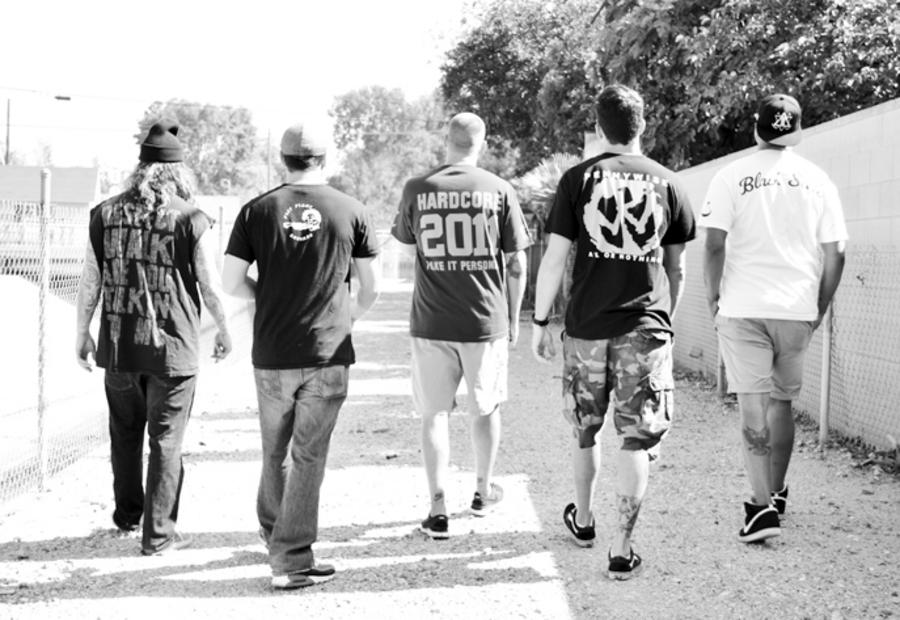
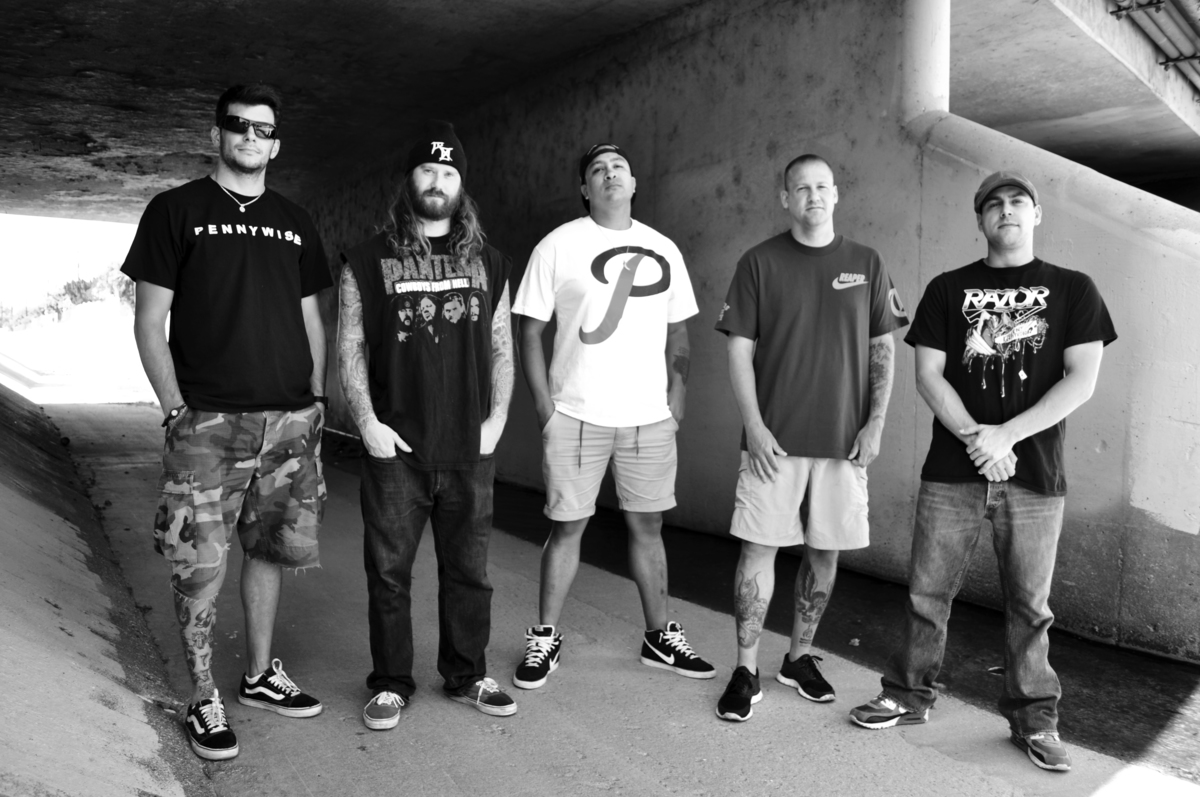
In terms of Fashion, Terror have only been known to wear mainly their own merchandise, similar bands of the same genre or anything promoting the Hardcore Scene along with cargo shorts/jeans as you can see below.